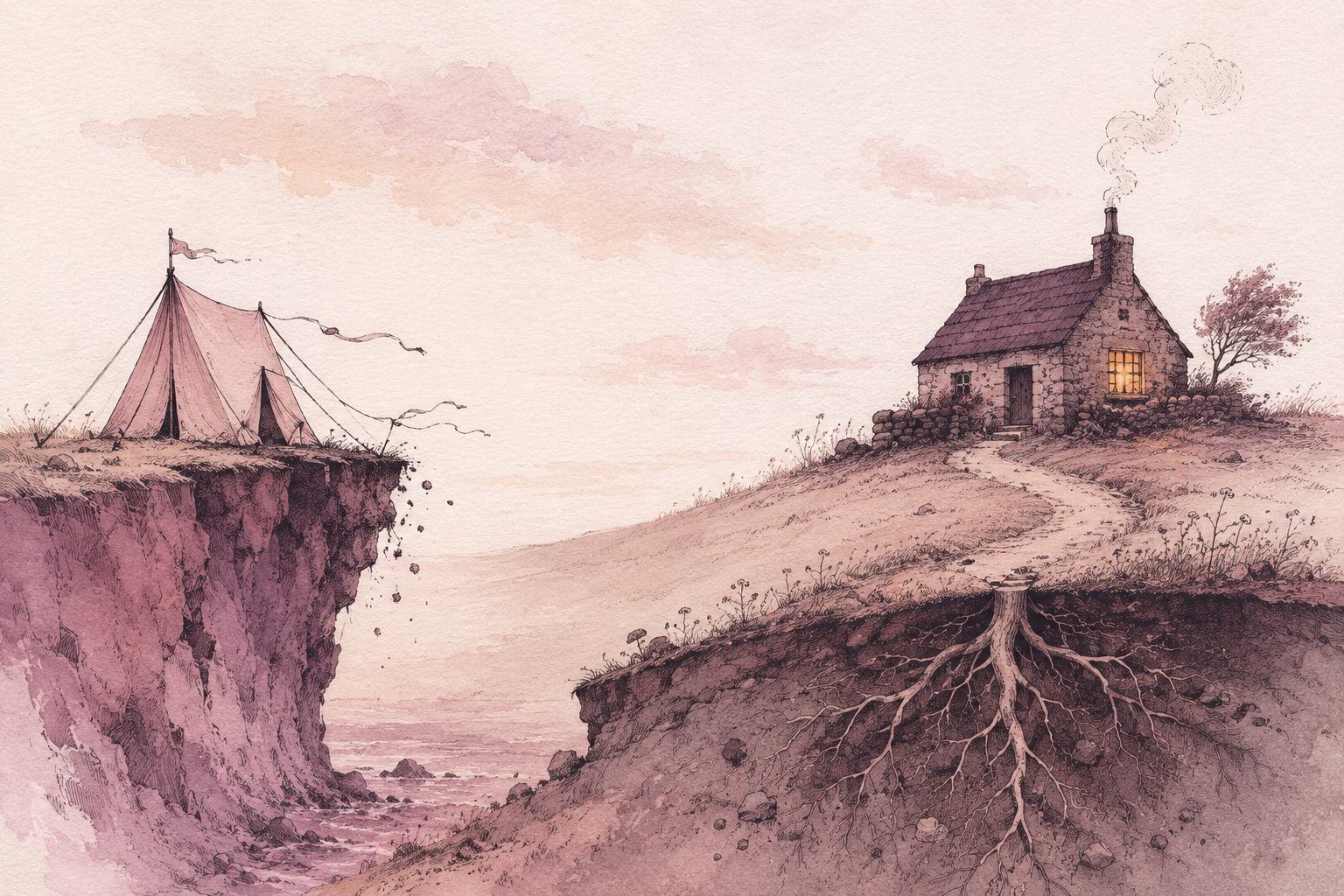
Short answer: yes. Social media is great for getting found. It's a bad place to actually run your business. If booking, follow-up, and lead capture all live inside an app you don't own, you're one algorithm change or one wrongful account ban away from starting over.
That doesn't mean you need a huge site. It means you need a home base that's yours.
Is social media alone enough to run a business on?
Not on its own. Social is a discovery channel, not a place to capture and keep clients. Organic reach keeps dropping, accounts get suspended without warning, and a follower is not a lead you own. Build only on social and you're building on land you're renting from Meta.
The numbers are worse than most owners think. Facebook organic reach sat at about 1.37% across 2024, per Social Status's 2024 social media benchmark report. Instagram is not far ahead. Hootsuite, citing Socialinsider 2025 data, puts Instagram organic reach at 3.50%, down 12% year over year. Translation: if you have 1,000 followers, fewer than 40 see any post. That number shrinks every year because Meta would rather you pay to reach the audience you already built.
Then there's the part nobody plans for. Through 2025 and into 2026, CBS News Philadelphia, NBC DFW, and ABC7 Chicago documented a wave of wrongful Facebook and Instagram bans tied to Meta's AI moderation. ABC7 Chicago reported a Change.org petition about wrongful Meta suspensions passed 55,000 signatures. CBS profiled a gym owner whose pages were suspended over claims she said were false. Her line: "Ninety-five percent of my business comes from Facebook." It vanished overnight.
A website does not get suspended by an algorithm. That's the whole point.
How do people actually find and choose a service business in 2026?
They research first, then they decide. About 81% of shoppers look online before buying (Network Solutions, 2025), and roughly a third say they've skipped a small business specifically because it had no website. The path is research, reviews, site check, decide. No site, no decision.
The buying path usually looks like this. Someone hears about you, or finds you on Google or Instagram. They read your reviews. Then they want to check you out properly. BrightLocal's 2026 Local Consumer Review Survey found 54% of consumers visit a business's website after reading positive reviews, up from 32% in 2019. That's the moment your site earns its keep. No site, and a chunk of those people quietly move on to someone who has one.
Yes, younger people use TikTok and Instagram to search. The "Gen Z ditched Google" story got overblown. Adobe Express data covered by Search Engine Journal in February 2026 showed the share of Gen Z who prefer TikTok over Google actually fell to 4%, down from 8% in 2024. Google still topped the "most helpful for finding information" list at 85%. Social is for vibe-checking. Google and increasingly ChatGPT are where people go to actually find and contact you.

Does a website still matter for Google and AI search?
Yes, and arguably more now than five years ago. Your Google Business Profile carries the map results, but your website is what lets you rank in the regular results below the map. On the AI side, ChatGPT, Perplexity, and Google's AI answers cite websites more than any other source. No site, no citation.
Google's own guidance ties local "prominence" partly to how many websites link to you. Google also says people are 2.7 times more likely to consider a business reputable when it has a complete Business Profile, and that profile links straight to your website. BrightLocal's local SEO research found that having a dedicated page for each service you offer is the top factor for ranking in local organic results. You can't build service pages on an Instagram grid.
AI search adds a new reason. BrightLocal's 2025 analysis of ChatGPT Search sources found 58% of the results it cites for local queries come from business websites. Pew Research's July 2025 study of Google AI Overviews showed users click outbound links roughly half as often when an AI summary appears. That changes the math: being the cited source matters more, not less. A Facebook page rarely gets cited the way a structured site does.
Claim the Google Business Profile first. It's free and does a lot of the work. Then back it with a small site so you're not invisible in the regular results, or in the AI ones.
What about booking and follow-up? This is where social fails hardest.
Booking and follow-up are where "social only" leaks the most money. People want to book themselves, on their own time, often at night. A DM thread can't do that. Zippia reports 40% of appointments get booked after business hours, and GetApp found 94% of consumers are more likely to pick a provider that offers online booking. That's the gap your site closes.
Here's the pattern I see most. (Hypothetical example, drawn from common Bloomwired intake situations.) Someone runs a clean Instagram, posts consistently, and gets the DMs rolling in. Inquiry hits at 9pm. They reply at 9am the next day. The person already booked someone else. No automatic reply, no booking link, no follow-up if the conversation went quiet. The marketing worked. The system behind it did not exist.
A website fixes this with three plain pieces:
- A booking widget so people can schedule themselves, 24/7
- A form that routes inquiries somewhere you'll actually see them
- A follow-up sequence that nudges people who didn't finish
That's most of what we build for service businesses at Bloomwired.
Why owning your audience beats renting it
A follower is borrowed. An email subscriber and a booking record are yours. That difference compounds. Email still outconverts social by a wide margin, and if your account gets locked, your email list and client records stay with you. Move people from rented ground to owned ground every time.
Porchgroupmedia's 2025 figures show email traffic converting at 4.24% versus 0.59% for social. HubSpot's marketing benchmark data ranks website, blog, and SEO at the top of ROI for B2B, with email close behind for consumer brands (HubSpot, 2026). The gap is not small and it's not new. It's been the pattern for years.
Control is the deeper reason. If Meta locks your account at 3am, your followers are gone and you can't message a single one. Your email list and your client records live with you. When you route people from social to your own site and capture them there, you are converting renters into ownership. Every time.
What's the smallest website that actually does the job?
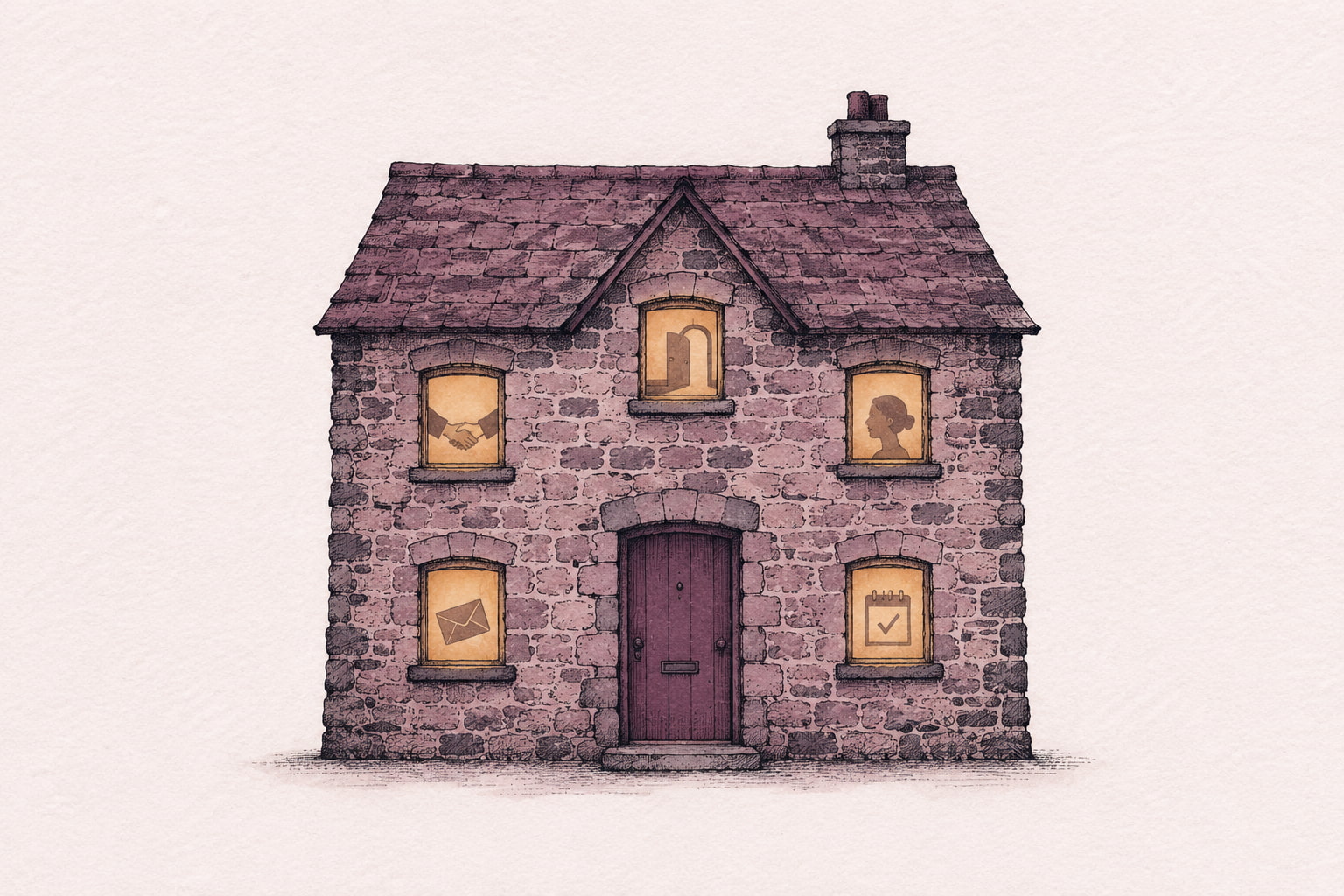
Five pages. For most service businesses, that's enough to rank, capture, and book without spending five figures. Home, services, about, contact, booking. Add a simple email capture with a real reason to sign up. Skip the bloat. Add more later if you actually need it.
| Page | What it does |
|---|---|
| Home | One clear line on who you help and a button to book or inquire. |
| Services | A section for each service. This is your Google ranking workhorse. |
| About | Your face, your credentials, the trust check before someone books. |
| Contact | A working form and your real phone number. |
| Booking | An embedded scheduler so people book themselves, 24/7. |
Pair that with a claimed Google Business Profile and an embedded scheduler and you have the version that ranks, captures, and books. Squarespace, Showit, or a small GoHighLevel funnel can carry it. WordPress works too if someone you trust is maintaining it.
What I'd be careful about
A few honest caveats so you don't overcorrect.
A website alone is not an automatic faucet. If nobody can find it, it won't book anyone. The site and the Google profile work together. Build both or the site sits there.
The survey numbers are directional, not gospel. A lot of this data comes from people self-reporting what they say they'd do. Stated behavior always looks tidier than real behavior. Treat the direction as solid and the exact percentages as rough.
Source numbers disagree on how many small businesses have sites. Clutch puts the figure around 83% across all SMBs (Clutch, 2024), while BrightLocal's SMB Marketing Report 2025 finds only about 40% of local SMBs have a dedicated website. The Clutch sample skews tech-forward and broader than local services. For service businesses specifically, BrightLocal's figure matches what I see on the ground. Most do not have a proper site. That's the opportunity, not the excuse.
And don't quit social. The answer is not website instead of social. It's social to get found, website to convert. Post where your people are. Send them somewhere you own.
FAQ
Do I need a website if I already get clients from Instagram?
Yes. Instagram is bringing people in, which is the hard part. You're likely losing inquiries that come in after hours and have no easy way to book or follow up. A small site catches what the DMs drop.
Isn't a Facebook page basically a website?
No. You don't own it, you can't rank service pages on it, AI search rarely cites it the way it cites a real site, and Meta can suspend it without warning. It's a storefront on someone else's street.
What's the cheapest version that still works?
A 5-page site (home, services, about, contact, booking) with an embedded scheduler and a simple email capture. Launch that on Squarespace, Showit, GoHighLevel, or WordPress without a big budget.
Will AI search make websites pointless?
The opposite. AI answers cite websites more than any other source. Pew Research found AI summaries reduce outbound clicks roughly in half, which means being the cited source matters more, not less. No site, no citation.
What should I build first, the website or the Google profile?
The Google Business Profile. It's free, fast, and Google's data says it makes you 2.7 times more likely to be seen as reputable. Then add the site so you also show up below the map.
How long does a small service business site take to build?
A clean 5-page site with booking and a follow-up flow takes about 2 to 4 weeks when one person owns it. Most of the time is content, not code: writing the home and services pages, photos, and the booking and follow-up logic.
A quick last word
If you're reading this because something feels like it's leaking, you're probably right. The marketing is working and the system behind it is not catching everyone.
That's the exact thing we fix at Bloomwired. We build the path from inquiry to booking to follow-up so the leads you're already getting don't slip away. The System Snapshot shows you where things stand. The Setup Check is where we look at it together.
Even if you build it yourself, build the home base. The rest is rented.