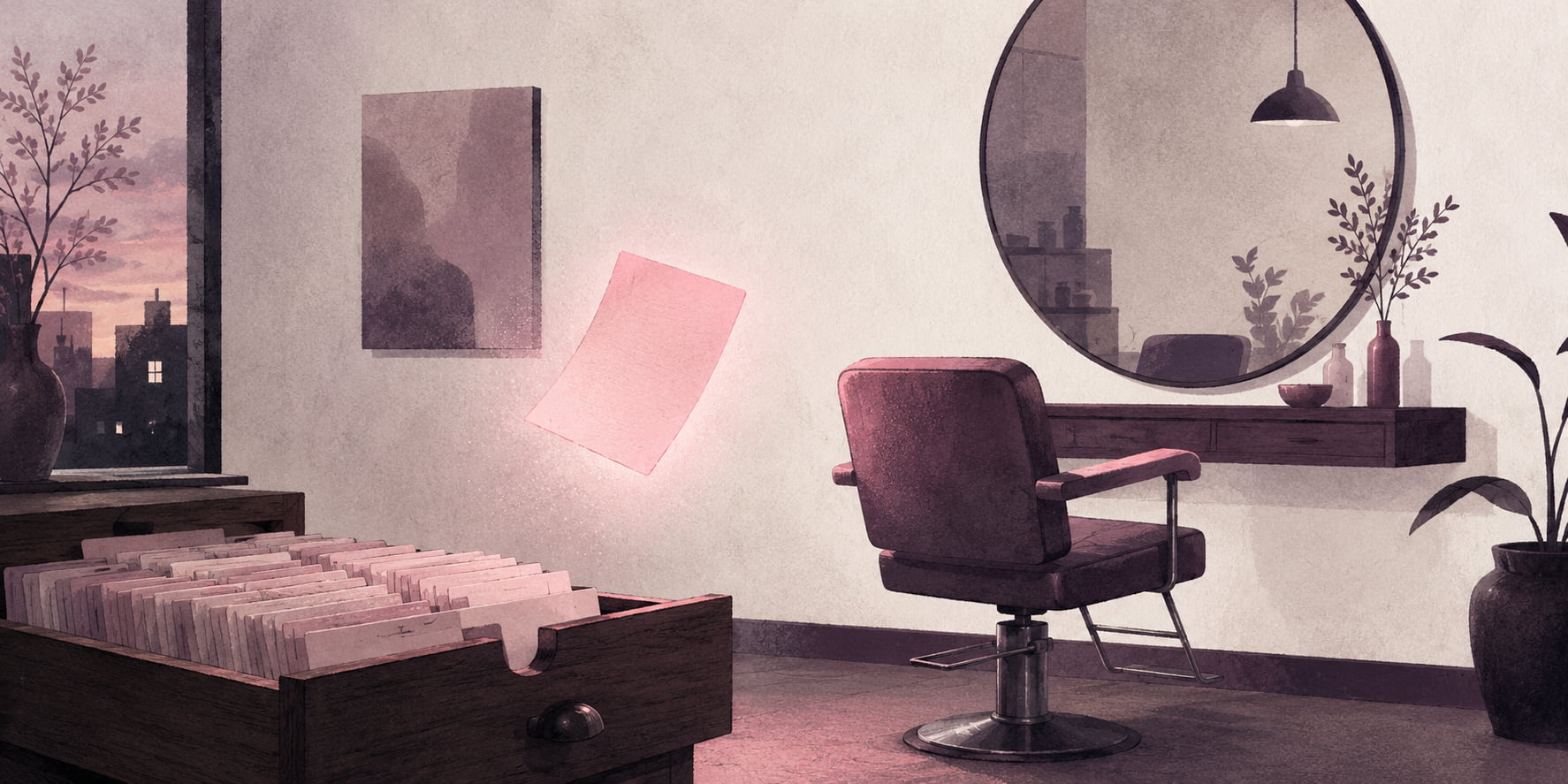
Flip through your client list and count the names you haven't seen since last year. Those people didn't fire you. Most of them drifted, felt a little awkward about it, and started over somewhere closer to work. Reactivation is how you make coming back the path of least resistance.
Why do salon clients actually stop coming?
Mostly drift, not defection. The six-week visit stretches to ten, a season passes, and walking back in starts to feel awkward. Industry benchmarks put average new-client retention at 30 to 40%, which means a typical salon quietly loses more than half of every month's new faces.
Nobody sends a breakup text to their stylist. They just don't book. Then a few months pass, and rebooking starts to carry a strange little weight: do I explain where I've been? Will it be weird? So they put it off again, and eventually they try the place near the new office, not because it's better but because it's not awkward.
The numbers say this is the norm, not the exception. Salon industry benchmarks compiled by Boulevard (2025, citing the Salon Today Industry Report) put first-visit return rates around 30 to 45%, with healthy salons working hard to reach 60 to 70%. Read that from the other direction: even a good salon watches a third or more of its new clients quietly vanish.
Here's the part that should change how you see your contact list. Every one of those vanished names already knows your work, already trusted you with their hair, and already proved they'll pay your prices. They're not cold leads. They're warm relationships on pause, waiting for someone to break the silence. That someone is not going to be them.
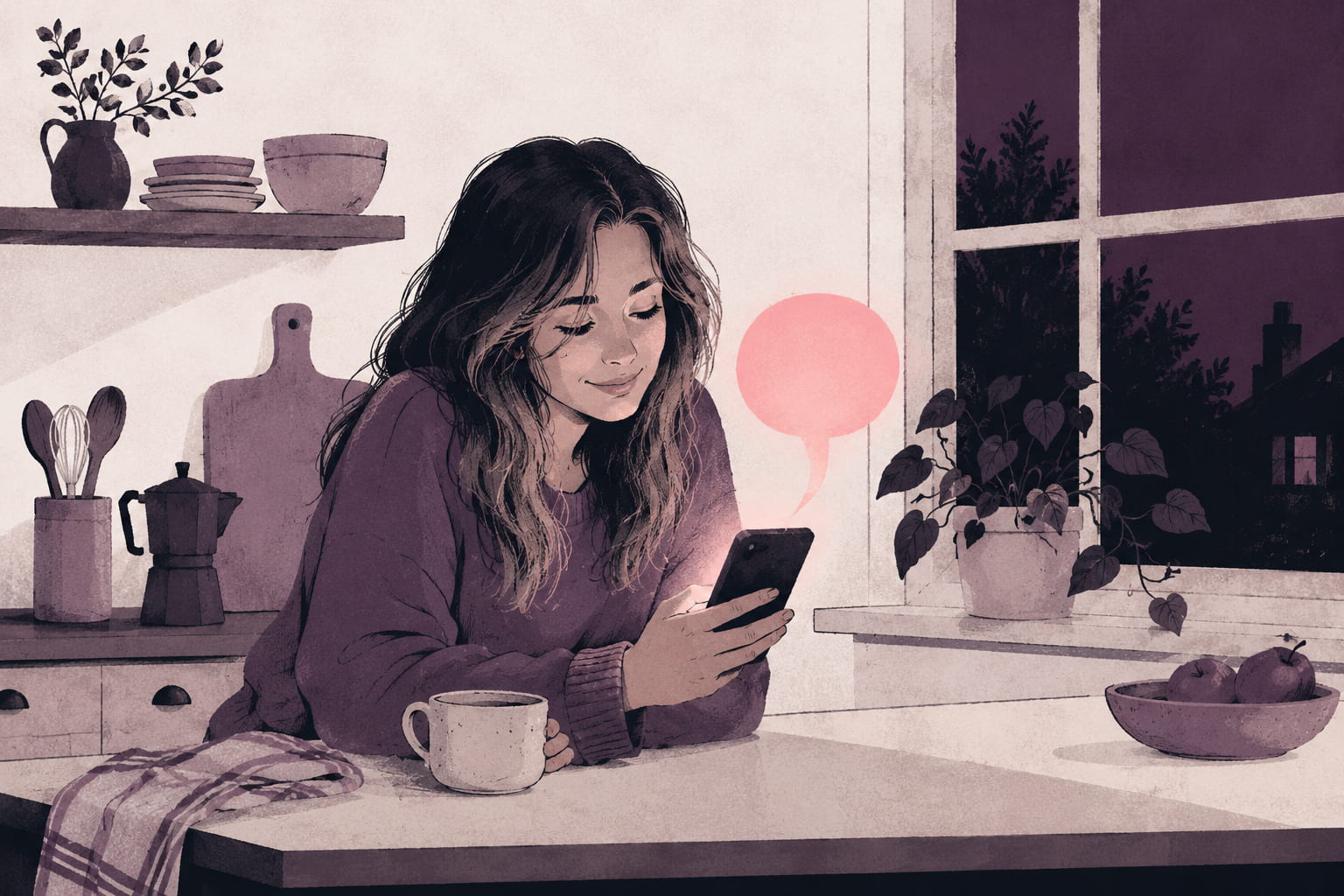
What is a client reactivation campaign, and why is the math so good?
A short, personal message sequence to clients who haven't visited in a while, inviting them back with one concrete next step. The math leans heavily in its favor: Harvard Business Review puts new-customer acquisition at 5 to 25 times the cost of keeping an existing one, and a win-back text to your own list costs almost nothing.
The economics are the whole argument, so here they are plainly. Harvard Business Review (2014), citing Bain research, puts the cost of acquiring a new customer at 5 to 25 times the cost of retaining an existing one. The textbook Marketing Metrics (Farris et al., widely cited) estimates the probability of selling to an existing customer at 60 to 70%, a former customer at 20 to 40%, and a brand-new prospect at 5 to 20%.
Now apply that to a salon. You already paid to acquire every name on your list, through ads, referrals, or years of being good at what you do. The acquisition cost is spent. A reactivation message is a second harvest from a field you already planted, and the message itself costs pennies. Compare that to what a new-client booking costs through Instagram ads, and the question stops being whether to run reactivation and becomes why it isn't already running.
One more thing the numbers hint at: a won-back client isn't a downgrade. They skip the trust-building phase entirely. They know the parking, the prices, and how you take their coffee order. The relationship resumes rather than restarts.
What should the win-back message actually say?
Three short messages over about three weeks, in the stylist's voice, each with a booking link. Lead with the relationship, not a discount. A discount teaches clients to wait for discounts. The first message should read like a person noticing an absence, because that's exactly what it is.
Hi Dana, it's Mia at Willow + Main. I was going through my books and realized it's been a while! I'd love to get you back in my chair. Want me to hold a spot next week? You can grab a time here: [booking link]
Why this works where blasts don't:
- It's from a person, not a brand. "It's Mia" lands differently than "Dear valued client." The relationship is the asset, so the message should sound like it.
- It dissolves the awkwardness. "It's been a while" said warmly by the salon means the client doesn't have to explain anything. The weight is lifted before they reply.
- One concrete next step. The booking link turns a warm feeling into an appointment while the phone is still in their hand. No "call us to schedule."
Messages two and three follow the same shape we use for any quiet lead, the same logic as the follow-up sequence for ghosted inquiries:
- Message two, about a week later. Light and specific. "No stress if now's not the time! Thursdays have been quiet lately if your schedule's tight." Useful, not pushy.
- Message three, about two weeks after that. The graceful close, optionally with a perk: a free gloss, a treatment add-on, something that adds value without cutting your price. Then stop. Silence after three messages is an answer, and respecting it is what keeps the door open for next season.
How do you run reactivation without annoying anyone?
Segment by time away, suppress everyone with a future appointment, send from the salon's real number, and stop after three messages. Texting requires A2P registration and a working opt-out, and the list needs cleaning first. Reactivation done badly is just spam wearing a familiar name.
The single biggest quality lever is segmentation. Someone who's eight weeks overdue and someone who vanished two years ago should not get the same message:
The operational rules that keep it clean:
- Suppress before you send. Anyone with a future appointment, anyone who opted out, and anyone who left after a complaint or refund. Texting an unhappy ex-client "we miss you" reopens a wound, not a relationship.
- Drip the sends. Twenty to fifty messages a day, not five hundred at once. It protects your sending reputation, and it means the replies arrive at a pace your front desk can actually answer. A won-back client who texts into silence is lost twice.
- Register before you text. US business texting requires A2P registration, the same requirement we covered in the missed call text back post. Skip it and carriers quietly block your campaign before a single client sees it.
- Honor every opt-out forever. One "stop" means stop. The list shrinks a little and gets healthier every time.
What I'd be careful about
This topic attracts more hype than any other thing we build, so here's the honest version.
Ignore the "$10k from your dead list in 7 days" promises. That pitch is everywhere, and the fine print is always a huge, recent list. Results scale with how many contacts you have and how recently they visited. A 400-contact list with realistic reply rates books a handful of appointments. At salon prices that's still excellent for an afternoon of setup, but it's a faucet, not a lottery ticket.
The discount trap is real. Win clients back with 30% off and you've taught your whole list that leaving earns a coupon. If you want a sweetener, add value instead: an add-on treatment, a longer appointment, a first-pick slot.
Old lists are dirty lists. Numbers change hands and emails go stale. Expect bounces from the 12+ month segment, clean as you go, and never buy or borrow contacts to pad the list. One spam complaint costs more than ten reactivated clients earn.
Some clients left on purpose. A small slice of any lapsed list had a reason: a bad color day, a billing dispute, a stylist they didn't click with. The suppression pass matters more than the message copy. When in doubt, leave them out.
If you're not sure your list, your number, or your booking path is ready for this, the System Snapshot shows you where things stand. The Setup Check is where we look at it together.
FAQ
How long before a salon client counts as lapsed?
Roughly double their normal visit cycle. For most hair clients that's 8 to 16 weeks of quiet. Lash, nail, and barber cycles run shorter, so the threshold tightens. The point is to catch the drift early, while rebooking still feels normal instead of awkward.
Should I offer a discount to win clients back?
Lead with the relationship, not a percentage. Discounts train your list to wait for discounts. If you want a sweetener for the third message, add value instead: a free gloss, a treatment add-on, or first pick of a popular slot.
Should reactivation messages be texts or emails?
Text for the recent segments, where the relationship is still warm and a short personal note reads naturally. Email for the 12+ month segment, where a text from a number they deleted can feel intrusive. Texting requires A2P registration first, or carriers block it silently.
How many lapsed clients will actually come back?
Honestly: it depends on list size and recency, and anyone quoting a number before seeing your list is selling something. Marketing Metrics puts the propensity of a former customer to buy again at 20 to 40%, but real campaign bookings land well below that. The recent segments always do best, which is why catching drift early beats heroic resurrection later.
How often can I run a reactivation campaign?
The better question is why run it as a campaign at all. The strongest setup is a rolling automation: when any client hits 10 weeks of quiet, their win-back sequence starts automatically. No quarterly blast, no list to remember, and nobody waits six months to be missed.
Can Bloomwired build this for my salon?
Yes. Client reactivation is one of our core builds: list cleanup, segmentation, messages written in your voice, A2P registration, and the booking path the replies land on, at a fixed price. The Setup Check is the right first step.
A quick last word
Every salon owner I've talked to wants more new clients, and almost none of them have sent a single message to the hundreds of people who already loved sitting in their chair. The list in your booking software is the cheapest marketing channel you will ever own. It's just been on silent.
If you want help turning it back on, that's what we do at Bloomwired. The System Snapshot shows you where things stand. The Setup Check is where we look at it together.